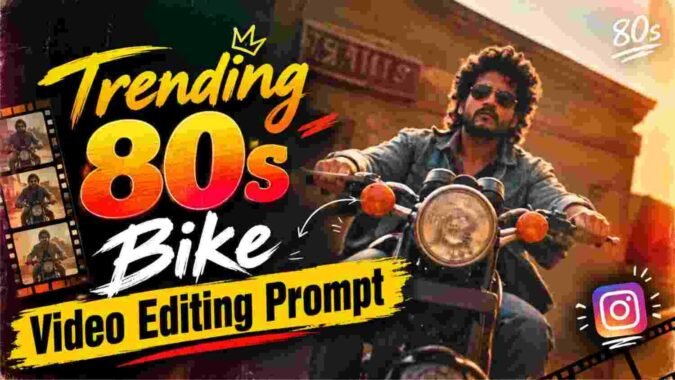
A bike, a photo, and a little touch of the old days these three things can turn your normal photo into a video that feels like a scene from a 1980s movie! An old-style bike, retro clothes, a vintage street, cinematic camera movement, and classic colors can come together to create an amazing 80s look.
You do not need to learn difficult editing to create this type of video. Trending 80s Bike Video Editing Prompt With Google Flow and the right prompt, you can create this cinematic retro style easily. You can use your own photo and create a video where your real face and identity stay the same, while the whole environment takes you back to the world of classic 80s movies.
Trending 80s Bike Video Editing Prompt
The Trending 80s Bike Video Editing is an editing idea that can turn your photo or bike photo into the style of a classic 1980s Indian movie. This style includes an old-fashioned motorcycle, vintage streets, retro clothes, warm lighting, and a classic film camera look. Together, these details give the video a beautiful old-school cinematic feeling.
With this prompt, you can change not only the bike but also the entire scene. You can use an old city street, village road, vintage posters, small shops, or other classic backgrounds. The face, skin tone, hairstyle, and body shape of the person can stay the same while only the overall time period and style are changed. This makes the 80s bike trend a great choice for anyone who wants to create something different for Instagram Reels, YouTube Shorts, or Facebook.
Bring Your 80s Bike Vision to Life
To create this 80s bike video, first use a clear and good-quality photo in Google Flow. A photo where both the person and the bike are clearly visible can help create a better result. Then, clearly tell the prompt to transform the image into a cinematic 1980s Indian bike scene.
The prompt should include clear instructions to keep the person’s face unchanged. You can mention that the face shape, facial features, skin tone, hairstyle, and body proportions must remain the same. After that, add details such as a vintage motorcycle, retro Indian street, 1980s clothing, warm sunlight, cinematic composition, and realistic film texture.
You can also describe how you want the scene to move. For example, the bike can slowly move forward, the camera can smoothly move around the subject, the hair and clothes can move slightly in the wind, and the background can move naturally. This can make the result feel more like a real cinematic video instead of simply a moving photo.
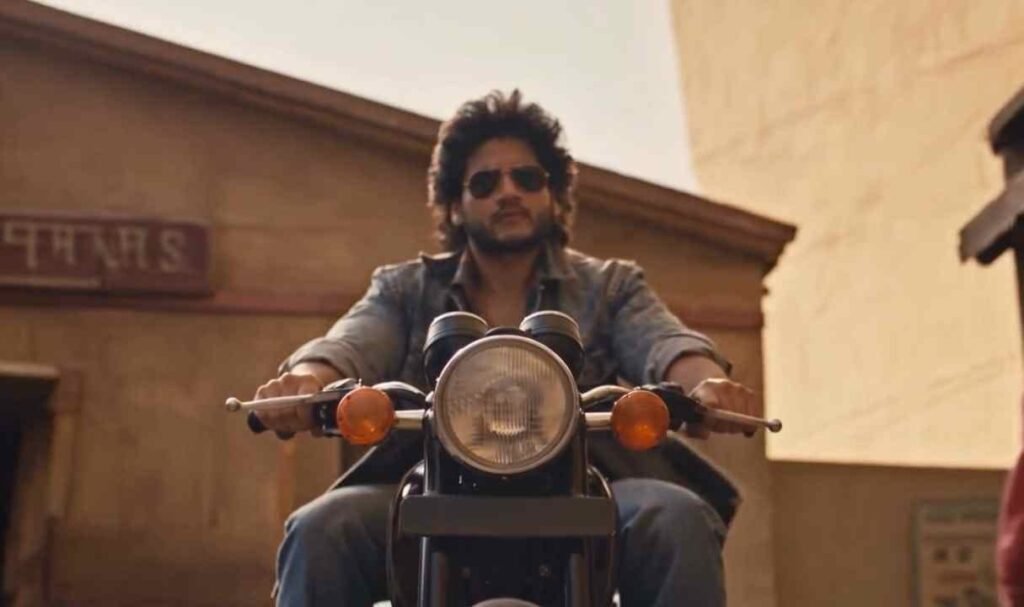
Create a cinematic 9:16 vertical commercial using my provided photo as the identity reference for the main male character. Preserve my exact facial identity, facial structure, skin tone, hairstyle characteristics, body proportions and recognizable appearance throughout the entire video. Do not morph my face or introduce a different person. Recreate the visual language, shot progression, camera choreography and cinematic feeling of the reference video, but replace the original actor with me. STYLE: Premium Indian cinematic commercial, nostalgic late-1970s/1980s-inspired Indian action-film aesthetic, warm dusty color palette, golden sunlight, subtle film grain, realistic skin texture, atmospheric dust, practical lighting, shallow depth of field, anamorphic-style highlights, natural motion blur, rich contrast, slightly faded film colors, sophisticated production design. It should feel like a real expensive film shoot, NOT AI-generated. WARDROBE: Dress me in an authentic retro Indian hero outfit inspired by the reference: off-white/cream traditional shirt or kurta with a strong deep-red scarf/stole, slightly loose vintage silhouette, period-appropriate styling. Add dark aviator sunglasses in the later hero shots. Keep the wardrobe consistent between shots. MOTORCYCLE: Use a classic vintage Indian motorcycle resembling the motorcycle in the reference. Chrome details, round headlamp, analog mechanical components and period styling. Motorcycle must remain physically realistic and consistent across shots. SHOT-BY-SHOT SEQUENCE: SHOT 1 — 0:00–0:01: Extreme macro close-up of the motorcycle. Show the rider’s cream/white sneaker resting on the motorcycle footrest and detailed chrome/black mechanical components. Camera is extremely close to the bike, low angle, shallow depth of field. Warm sunlight glints off chrome. Subtle vibration from the running motorcycle. Slow, deliberate cinematic camera movement. SHOT 2 — 0:01–0:03: Extreme close-up of my right hand gripping and operating the motorcycle throttle/handlebar. Show realistic hand movement, mechanical details and subtle vibration. Camera tracks alongside the hand with a very shallow depth of field. Warm highlights and deep shadows. Make the motorcycle feel powerful and tactile. SHOT 3 — 0:03–0:04.8: Cut to a frontal low-angle shot of the motorcycle approaching camera. I am riding directly toward the camera. The round headlight dominates the foreground, handlebars visible, my upper body behind it. Camera is positioned very low near road level. The motorcycle moves naturally toward the lens. SHOT 4 — 0:04.8–0:07.4: Continue the frontal motorcycle hero shot but gradually reveal my face and upper body. I ride confidently toward camera through an old Indian market street. Dust particles float through the sunlight. Background contains authentic old storefronts, faded Hindi signage, weathered walls, pedestrians and period Indian street details. Camera subtly pulls backward while maintaining cinematic framing. SHOT 5 — 0:07.4–0:09.8: Wider tracking shot. I ride the motorcycle through a busy old Indian bazaar. Camera moves laterally/backward with the motorcycle. Pedestrians naturally react and move around me. Traditional clothing, colorful shops, dusty street atmosphere, authentic Indian architecture. Keep me sharply recognizable while the background has natural cinematic motion blur. SHOT 6 — 0:09.8–0:12.7: Cut to a street-side shop/counter. I arrive and stop at a rustic old-fashioned Indian shop. The camera tracks toward me as I lean forward slightly from the motorcycle. Behind the counter are rows of colorful glass bottles and vintage product packaging. Several background characters look toward me naturally. SHOT 7 — 0:12.7–0:14.8: Medium close-up hero shot. I lean toward the counter with a confident, charismatic expression. Camera slowly pushes in. Warm golden sunlight passes through the dusty atmosphere behind me. Background people remain softly out of focus. My face must remain identical to the supplied photo. SHOT 8 — 0:14.8–0:15.7: Tighter dramatic close-up. I pick up a glass bottle from the counter and bring it toward my mouth. Keep the motion smooth and deliberate. Strong golden rim light around my hair and shoulders. Retro cinematic lens flare. SHOT 9 — 0:15.7–0:20.8: Hero drinking shot. I drink directly from the glass bottle while wearing dark aviator sunglasses. Camera slowly pushes in from a medium close-up to a tighter portrait. The setting transitions visually from the market to an open golden-hour environment while maintaining continuity. Warm sunset behind me, orange-gold backlight, atmospheric haze and beautiful lens flare. My expression is confident and effortless. SHOT 10 — 0:20.8–0:25.1: Final wide cinematic shot. Cut to a huge open rural landscape at sunset. I ride the motorcycle away from the camera into the distance. Camera is positioned far behind and slightly low, creating a heroic silhouette. The sun is directly ahead/near the horizon, producing strong golden backlight and long shadows. Dust trails naturally behind the motorcycle. I gradually become smaller in frame while riding toward the glowing horizon. CAMERA LANGUAGE: Use professional cinema-camera movement throughout: macro lens for detail shots, low-angle tracking, controlled dolly push-ins, smooth backward tracking shots, lateral tracking, shallow depth of field and wide environmental establishing shots. Camera movement should feel intentional and physically realistic. No random camera shaking. EDITING: Fast but elegant commercial editing. Hard cinematic cuts between motorcycle details and hero shots. Maintain the approximate timing and rhythm of the reference. Use natural motion continuity between shots. No flashy transitions, no artificial effects, no excessive slow motion. LIGHTING: Warm late-afternoon/golden-hour sunlight. Strong backlight and rim light, dusty atmospheric haze, practical shop lighting, realistic shadows, subtle anamorphic lens flare. Maintain consistent warm cinematic exposure. COLOR: Vintage Indian cinema-inspired warm amber, cream, muted reds and earthy browns. Slightly faded analog film colors with subtle 35mm grain. Premium commercial finish, realistic skin tones. IDENTITY CONSISTENCY — CRITICAL: The person must remain ME throughout the entire video. Use my supplied photo as the primary facial/identity reference. Preserve my exact face, eyes, nose, jawline, facial proportions, skin tone and recognizable features. Do not beautify, age, de-age, reshape or replace my face. Maintain identity consistency across every cut, angle and lighting condition. REALISM: Photorealistic live-action footage. Realistic motorcycle physics, natural hand movement, realistic cloth movement, authentic human expressions, believable pedestrians and physically accurate shadows/reflections. Avoid warped hands, extra fingers, duplicated people, distorted motorcycle parts, floating objects, plastic skin, cartoon appearance or AI artifacts. The final result should look like a high-budget Indian cinematic advertisement starring me, faithfully recreating the reference video’s visual choreography while using my face and identity.Give Your Bike Video a Real 80s Feel
To make the video feel truly like the 80s, the background is very important. A very modern road or new-looking vehicles can reduce the old-school feeling. So, you can include old buildings, vintage shops, classic signboards, old roads, and simple surroundings from that era.
For the colors, avoid an overly bright or modern look. Instead, use warm and slightly faded tones. A little film grain, soft sunlight, and natural shadows can make the video feel like old camera footage.
The bike movement and camera movement should also not be too fast. Slow cinematic movement can give the entire scene a much stronger classic movie feeling.
Make the Retro Bike Scene More Eye-Catching
- A good 80s video is not only about showing an old bike.
- The scene becomes more interesting when it feels like it has a small story. For example, a person can stand beside a vintage bike, slowly get on the bike, and ride down the road while the camera follows from a distance.
- This type of movement can make the video feel much more cinematic.
- You can also choose a daytime, sunset, or evening setting.
- The clothes can follow the fashion of that era as well. A classic shirt, high-waisted trousers, sunglasses, and simple retro accessories can make the 80s look even stronger.
- However, everything should remain realistic without adding too many effects. This will help the final video look natural and movie-like.
Conclusion
The Trending 80s Bike Video Editing Prompt can turn a simple photo into a beautiful retro cinematic video. With Google Flow, you can combine an old-style bike, vintage streets, classic clothes, warm lighting, and cinematic camera movement to bring back the charm of the 1980s.
The most important thing is to clearly describe what you want in the prompt and tell the AI to keep your original face and identity unchanged. With the right scene, natural movement, and retro colors, your 80s bike video can get a unique look that stands out from the usual edits.